
Have you ever received a message that says “IMO, this movie is overrated” and paused for a second trying to figure out what it means? 🤔 You’re not alone.
In today’s fast-paced digital world, people rely heavily on short forms, slang, and abbreviations to communicate quickly. One such commonly used abbreviation is IMO. Whether you’re chatting on social media, texting a friend, or scrolling through comments, understanding the IMO meaning in text can help you stay connected and avoid confusion.
In this comprehensive guide, you’ll learn what IMO means, where it comes from, how to use it correctly, and even discover real-life examples.
What Does IMO Mean in Text? 📱
IMO stands for “In My Opinion.”
It is used when someone wants to express a personal thought, belief, or viewpoint without sounding too forceful or absolute.
👉 Example:
- IMO, this restaurant has the best food in town.
- IMO, you should go for the blue shirt.
In simple terms, IMO softens a statement and shows that it’s just your perspective, not a fact.
Why Do People Use IMO? 🤷♂️
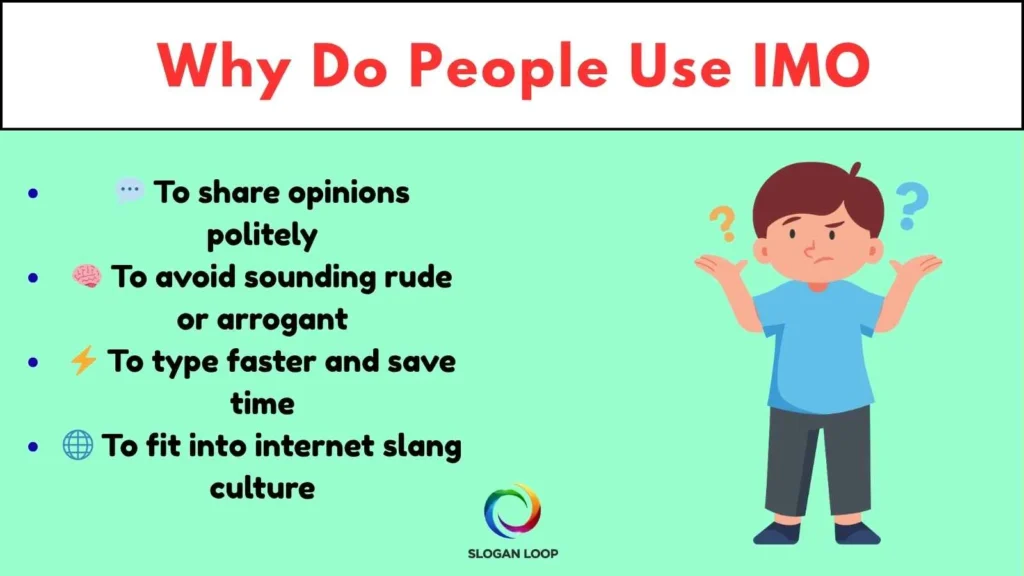
People use IMO in text messages and online conversations for several reasons:
- 💬 To share opinions politely
- 🧠 To avoid sounding rude or arrogant
- ⚡ To type faster and save time
- 🌐 To fit into internet slang culture
Using IMO helps create a friendly and respectful tone in conversations.
Origin of IMO (Where Did It Come From?) 🕰️
The abbreviation IMO originated in the early days of the internet, especially in:
- Online forums
- Chat rooms
- Email conversations
Before social media existed, people used short forms like IMO to communicate quickly on slow internet connections. Over time, it became a standard part of internet slang.
“IMO is not just a shortcut—it’s a way to express thoughts respectfully in digital conversations.”
IMO vs IMHO: What’s the Difference? ⚖️
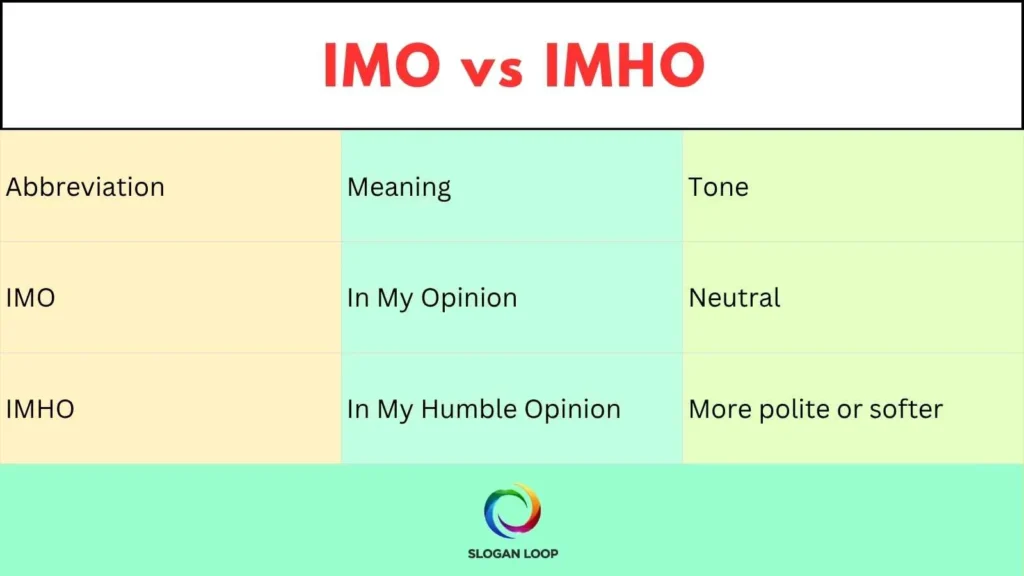
You might also see another similar abbreviation: IMHO.
| Abbreviation | Meaning | Tone |
|---|---|---|
| IMO | In My Opinion | Neutral |
| IMHO | In My Humble Opinion | More polite or softer |
👉 While both mean almost the same, IMHO sounds slightly more humble and less direct.
How to Use IMO in Texting 💬
Using IMO is simple and flexible. You can place it at the beginning, middle, or end of a sentence.
1. At the Beginning
IMO, this phone is not worth the price.
2. In the Middle
This movie is, IMO, too long.
3. At the End
You should try this app, IMO.
👉 All forms are correct. Choose what feels natural.
Examples of IMO in Real Conversations 🗨️
Here are some realistic examples to help you understand better:
- Friend 1: Which game should I buy?
Friend 2: IMO, go for the latest version. - IMO, studying early is better than last-minute cramming.
- IMO, social media can be both helpful and harmful.
These examples show how IMO makes statements sound more personal and less aggressive.
When Should You Use IMO? 📌
You should use IMO when:
- You are giving advice
- You are sharing personal preferences
- You are discussing opinions online
- You want to avoid arguments
👉 It’s especially useful in debates or comment sections.
When NOT to Use IMO ❌
Although IMO is helpful, avoid using it in:
- Formal writing (essays, reports)
- Professional emails
- Academic content
Instead, use phrases like:
- “I believe that…”
- “In my view…”
- “From my perspective…”
IMO in Social Media Platforms 🌐
The IMO meaning in text is widely used across different platforms:
- 📘 Facebook comments
- 🐦 Twitter (X) posts
- 📸 Instagram captions
- 💬 WhatsApp chats
- 🎮 Gaming chats
It helps users engage in discussions without sounding too strong or offensive.
Common Variations of IMO 🔄
Here are some variations you might see:
- IMHO – In My Humble Opinion
- IMOoo – Extended for emphasis
- imo – Lowercase version (casual)
👉 All versions carry the same core meaning.
IMO vs Other Slang Terms 🧩
| Slang | Meaning | Use Case |
|---|---|---|
| IMO | In My Opinion | Sharing thoughts |
| TBH | To Be Honest | Being honest |
| FYI | For Your Information | Informing |
| BTW | By The Way | Adding info |
Each abbreviation has a different purpose in communication.
Is IMO Rude or Polite? 🤔
IMO is generally polite.
It actually makes your message less aggressive because it shows you’re sharing a personal opinion, not forcing it.
However, tone still matters. For example:
- Polite: IMO, you might want to reconsider.
- Rude: IMO, that’s a terrible idea.
👉 So always combine IMO with respectful wording.
Quick Summary Table 📊
| Term | Meaning | Usage |
|---|---|---|
| IMO | In My Opinion | Expressing personal views |
| IMHO | In My Humble Opinion | More polite version |
FAQs
1. What does IMO mean in texting?
IMO means “In My Opinion”. It is used to share personal thoughts.
2. Is IMO formal or informal?
IMO is informal and mainly used in casual conversations.
3. Can I use IMO in professional emails?
No, it’s better to avoid slang in professional communication.
4. What is the difference between IMO and IMHO?
IMHO adds “humble,” making it slightly more polite than IMO.
5. Is IMO commonly used?
Yes, it’s widely used across social media and messaging platforms.
Conclusion
Understanding the IMO meaning in text is essential in today’s digital communication world. It’s a simple yet powerful abbreviation that helps you share opinions politely, avoid misunderstandings, and communicate effectively.
Whether you’re chatting with friends or commenting online, using IMO correctly can make your conversations feel more respectful and engaging. 💬
